

A 10-minute presentation gives you just enough time to inform, inspire, or persuade your audience without overwhelming them. Therefore, choosing the right topic ideas for a for10-minute presentation makes a huge difference. The best topics are simple, engaging, and structured well enough to fit into this short format.
This guide presents a curated list of the best 10-minute presentation ideas, along with tips to help you deliver them confidently.
10 Minute Presentation Ideas for Any Audience
Here is a wide collection of engaging and easy-to-explain topics. Whether you need impressive 10-minute presentation ideas for an interview, teaching, public speaking, or anything else, this list works pretty well! Check it out:
General & Interesting
- The psychology of happiness
- How human curiosity drives innovation
- Why we remember emotional moments
- The science behind first impressions
- How habits shape success
- Why storytelling connects generations
- The impact of optimism on health
- The psychology of decision-making
- Why humans love challenges
- How emotions influence memory
Business & Entrepreneurship
- How startups disrupt industries
- The evolution of digital marketing
- Why storytelling drives brand loyalty
- The importance of ethical leadership
- The role of innovation in business growth
- How data analytics transforms decisions
- Why customer experience matters
- The rise of social commerce
- The impact of AI on entrepreneurship
- The future of work and automation
Technology & Innovation
- The future of artificial intelligence
- How technology is shaping education
- The rise of machine learning
- The pros and cons of automation
- How cybersecurity protects privacy
- The role of blockchain in business
- The growth of renewable tech
- How the metaverse is evolving
- The future of space exploration
- Why open-source software matters
Environment & Sustainability
- The global impact of climate change
- The transition to renewable energy
- The challenges of water scarcity
- How cities can become more sustainable
- Why biodiversity is crucial
- The economic impact of deforestation
- How to build eco-friendly communities
- The rise of sustainable fashion
- The role of government in green policies
- The future of zero-waste living
Education & Learning
- The evolution of modern education
- How technology is transforming classrooms
- Why critical thinking matters
- The role of emotional intelligence in education
- How gamified learning improves retention
- Why lifelong learning is the new normal
- The benefits of hybrid learning models
- The importance of inclusive education
- How mentorship accelerates growth
- The impact of AI tutors on learning
Read in detail – Top Presentation Topics for Students
Health & Lifestyle
- The psychology of healthy habits
- How digital detox improves well-being
- The importance of sleep for productivity
- Why nutrition impacts mental health
- The link between exercise and creativity
- How mindfulness reduces anxiety
- The science behind habit formation
- Why balance is key to happiness
- How to manage burnout effectively
- The role of mental health awareness
Pop Culture & Entertainment
- How streaming platforms changed entertainment
- The economics of the music industry
- Why representation matters in media
- How pop culture influences politics
- The impact of fandoms on social change
- The future of virtual concerts
- How influencers shape public opinion
- The psychology of viral trends
- The role of gaming in social connection
- How nostalgia drives marketing
Society & Culture
- The rise of global citizenship
- How technology shapes modern culture
- Why empathy is a leadership skill
- The influence of migration on identity
- How remote work redefines community
- The evolution of gender equality
- The role of humor in political discourse
- Why cultural diversity fuels innovation
- The impact of digital globalization
- The future of social values
Science & Discovery
- The theory of relativity simplified
- How neuroscience explains behavior
- Why genetics influences personality
- The ethics of cloning
- How space exploration benefits Earth
- The future of quantum computing
- The biology of emotions
- The chemistry of happiness
- The science behind pandemics
- How AI helps scientific discovery
Read in detail – Best Science Topics for Students and Professionals
Creative & Fun
- How to build creative confidence
- The neuroscience of imagination
- Why art improves mental health
- The role of play in adult life
- How design thinking fuels creativity
- The power of creative collaboration
- The evolution of modern art
- How to overcome creative blocks
- Why music boosts productivity
- The psychology of inspiration
Read in detail – 400+ Funny PowerPoint Night Ideas to Steal The Show
Psychology & Self-Improvement
- The science of motivation
- How emotional intelligence drives success
- Why resilience matters in life
- The psychology of decision fatigue
- How habits influence happiness
- The power of self-reflection
- The importance of setting boundaries
- Why we fear failure
- The role of mindset in performance
- How gratitude rewires your brain
Innovation & Design
- How design thinking drives innovation
- The role of empathy in UX design
- The evolution of product design
- How AI impacts creative industries
- The future of sustainable design
- The psychology of color in branding
- How accessibility shapes design trends
- Why prototyping improves innovation
- How simplicity enhances usability
- The intersection of art and technology
Career & Growth
- The future of hybrid workplaces
- How automation changes job skills
- The importance of emotional intelligence at work
- How to build a growth mindset
- Why leadership skills matter at every level
- The role of mentorship in career success
- How to navigate career transitions
- The power of networking online
- Why soft skills define great leaders
- How to build resilience at work
Read in detail – Top Human Resource Presentation Topics for Modern Workplaces
Media & Communication
- How digital media influences society
- The evolution of journalism in the digital age
- The ethics of online reporting
- How visual content captures attention
- The rise of short-form storytelling
- How communication shapes brand identity
- The power of podcasts in education
- The influence of algorithms on opinions
- Why authenticity drives engagement
- The role of emotional appeal in marketing
Future Trends & AI
- The future of AI in healthcare
- The rise of autonomous vehicles
- The ethics of artificial intelligence
- How AI is transforming creative work
- The evolution of robotics
- The potential of quantum computing
- The impact of AI on employment
- The future of augmented reality
- Why human-AI collaboration is essential
- The promise of space-based technologies
Need something quick and impactful? Check out our curated 5-minute presentation topics to deliver clear, engaging ideas in very little time.
How to Pick Topic Ideas for a 10-Minute Presentation?
Your presentation is easier to prepare and more entertaining to deliver if you choose the correct topic. Remember these brief guidelines.
- Pick a Subject You are Familiar With – Select a topic that you already understand. This enables you to speak with assurance without needing to prepare too much.
- Don’t Broaden the Topic Too Much – A focused theme makes it easier for your audience to follow and fits better into a 10-minute format.
- Select a Topic That Truly Interests You – When you are enthusiastic about what you are discussing, it is evident. The presentation becomes more interesting as a result.
- Make Sure the Subject is Divided Properly – An excellent 10-minute presentation topic idea is organically divided into three to four distinct pieces. These are digestible chunks that maintain the flow.
- Choose Subjects With Compelling Narratives or Instances – In a short amount of time, your concepts become more memorable and easier to explain when you use real instances.
- Seek Out a Novel or Distinctive Perspective – A common topic might feel fresh with a little twist, personal opinion, or little-known information.
- Take Into Account What the Audience Finds Useful – Whether it’s picking up a new skill, comprehending a trend, or hearing a different viewpoint, consider what matters to your audience.
Turn your 10-minute presentation ideas into engaging decks instantly when you create your PowerPoint with AI.
How Many Slides Are Needed for a 10 Minute Presentation?
For most 10-minute presentations, seven to twelve slides are ideal. This typically entails one concept per slide and sufficient room for images rather than long text. Use charts or diagrams to cut down on explanation time. Keep your content succinct.
Give each slide between 45 and 60 seconds, depending on how complicated your subject is. Your objective should be to bolster your message without overpowering your audience.
Found your topic? Explore ready-made templates and turn your ideas into polished presentations faster.
Effective Tips to Deliver a Successful 10 Minute Presentation
Here are simple tips to help you present your ideas with clarity and confidence.
- Start with a strong opening to grab attention immediately. A question, quick fact, or short example can instantly pull listeners in.
- Prioritize one key idea per slide to keep your message clear. This prevents clutter and makes your presentation easier to follow.
- Use visuals like images or simple charts to communicate quickly. Well-chosen visuals save time by replacing long explanations.
- Keep text minimal so your audience stays focused on you. Short keywords or phrases work better than full sentences.
- Time your rehearsal and track how long each slide takes. This helps you stay within the 10-minute limit without rushing.
- Adjust based on the content. Complex topics need more visual slides. So, choose simple 10-minute presentation topic ideas which benefit from slower explanation.
- Maintain a steady pace throughout. Avoid rushing the end or lingering too long at the beginning.
- Include examples or short stories. Real-life moments make your ideas relatable and easy to understand.
- End with a clear takeaway or action step. A strong finish helps your audience remember your main message.
Create Presentations From Topics Instantly With SlidesAI
If you already know your topic but need slides fast, SlidesAI helps you turn ideas into presentations in seconds. Here’s how you can do it:
- Open SlidesAI.
- Go to SlidesAI Topic to PPT.
- Enter your topic and select “Just the Topic” option.
- Select the presention requirements such as audience, language, tone and type of presentation.
- Selct how you want to present your presentation.
- Enter 10 minutes as the length of your presentation.
- Select the text style and the relevant template.
- Review the AI generated outline.
- SlidesAI will generate the full content draft gfor the presentation.
- Once you have reviewed the content draft, proceed to design the slides.
- And your presentation is ready!
Take Your PowerPoint From Basic to Professional With SlidesAI
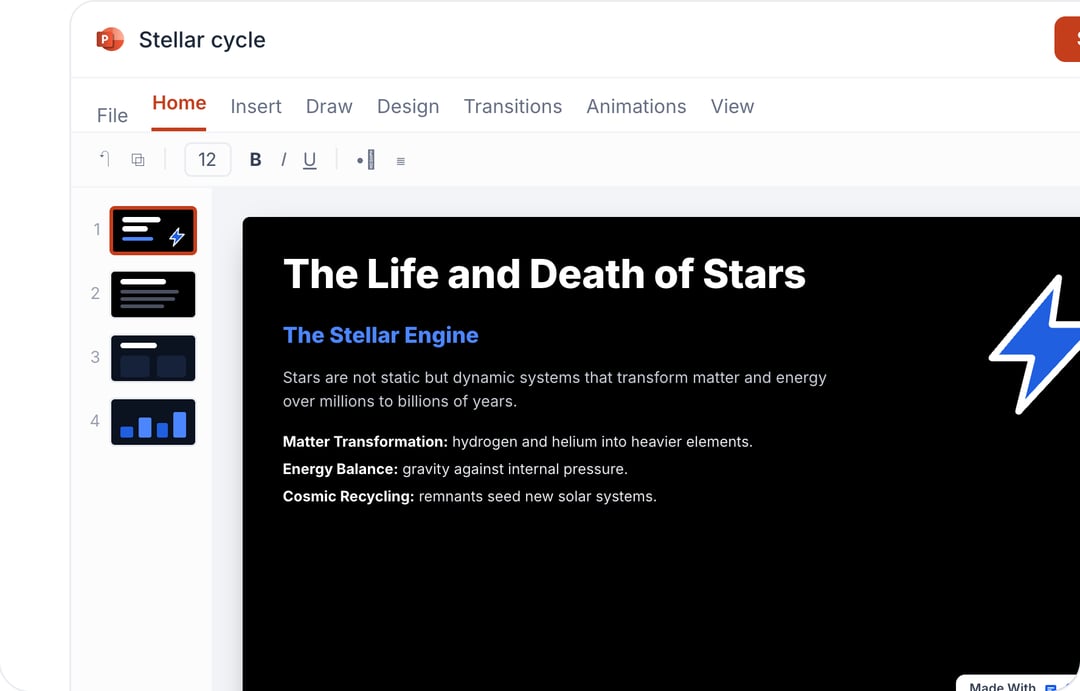
- Improve your slide content with AI
- Create polished layouts faster
- Work directly inside PowerPoint

Final Words
A 10-minute presentation becomes much easier when you have the right topic and a clear structure. With this collection of ideas, tips, and topic selection guidelines, you can create a talk that feels engaging and well-organized. And if you want to turn your topic into a ready-to-present slide deck instantly, SlidesAI gives you a quick and reliable way to get started.
Funny ideas. Student favorites. Leadership insights. Science breakthroughs. Pecha Kucha concepts. Human resource topics. No matter what kind of presentation you’re building, we’ve got a blog that speaks directly to your needs. Take a look at our full collection below and find your perfect match.
- 250+ Best Presentation Topics from Different Categories & Useful Tips
- 125+ Impromptu Presentation Topics for Students, Professionals, & More
- Best Leadership Topics for Presentation
- 10 Minute Presentation Ideas: Best Topics, Examples & Tips
- 200+ Persuasive Presentation Topics, Examples & Structure